
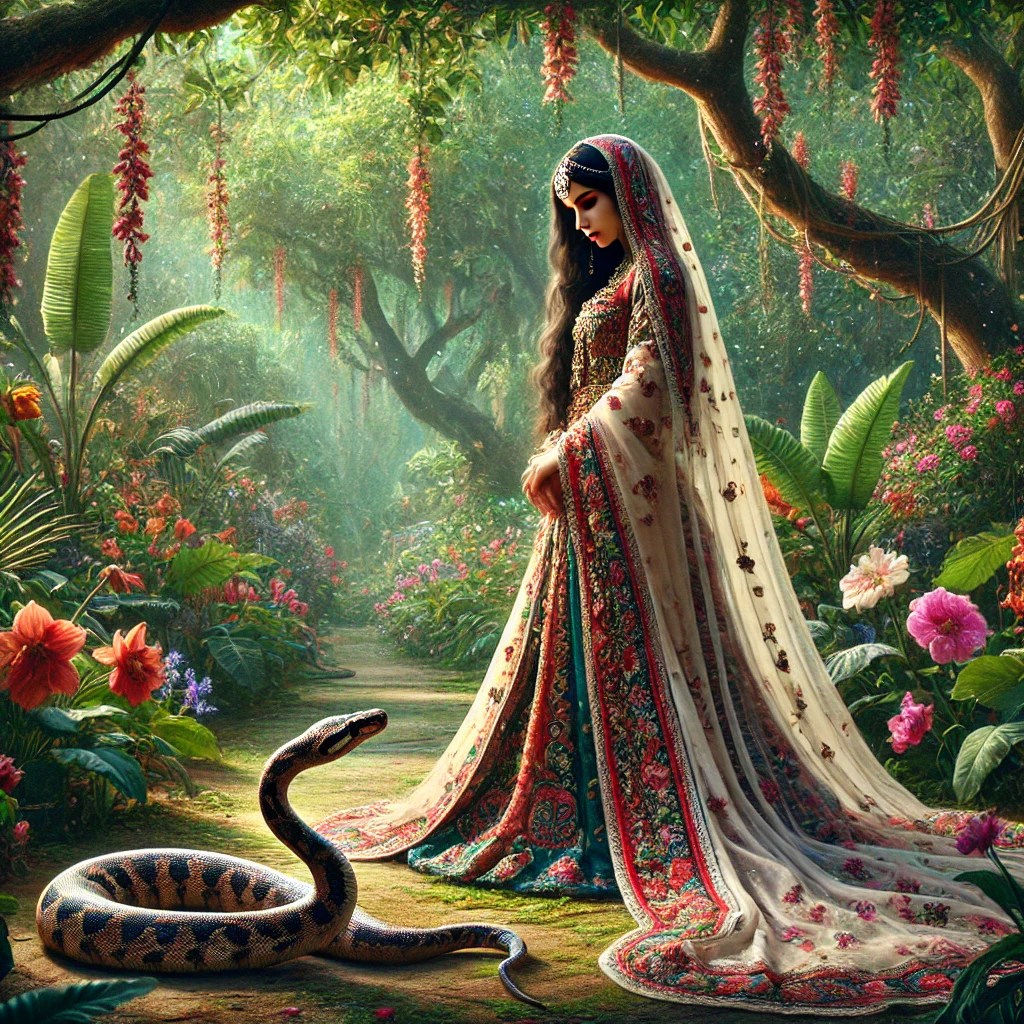
As someone writing a fictional world where women are revered as goddesses, I’ve been fascinated by how ancient myths of feminine deities were eventually overwritten by patriarchal narratives, particularly through the rise of monotheistic religions like Judaism, Christianity, and Islam.
Throughout human history, myths have served as the foundation of religious and cultural identities, shaping our understanding of the world, the divine, and the power dynamics between genders.
Abraham, traditionally considered the patriarch of the Abrahamic religions, may have played a pivotal role in the rewriting of ancient goddess-centered myths. As his descendants developed these religions, they transformed powerful female-centric symbols—like the goddess creation myths and the serpent—into tools that served the male-dominated religious structures that followed.
Abraham: The Birth of Monotheism and Reinventing God
Tradition holds that Abraham was the first to bring the idea of monotheism to his people after his encounter with God, who appeared to him as a burning bush. But what if this story was not just a divine revelation, but a strategic invention? Before his “encounter with God,” Abraham had been raised in Mesopotamia, in a culture rich with goddess worship. It’s plausible that Abraham, having grown up with the knowledge of Nammu, the primordial goddess of creation, may have been uncomfortable with the power attributed to women in these myths.
As Abraham traveled through Egypt, where he would have learned about Atum—a male god who created the world through an act of self-creation—he might have found an alternative that better suited a patriarchal worldview. Perhaps inspired by both his Egyptian and Mesopotamian experiences, Abraham “invented” the concept of one male God, who supposedly revealed himself to Abraham as the only divine power, relegating the feminine and goddess-centered beliefs to the past.
From this point, Abraham’s descendants began to promote the idea of one all-powerful male God, with no room for female divinity. This transformation of the divine—from a pantheon that included powerful goddesses to a singular male figure—set the stage for the patriarchal religious structures that would dominate for centuries.

Moses: The First to Write Down the Family Mythos
Another critical figure in this transformation is Moses, Abraham’s great-great-grandson. Moses is often credited with writing down the first five books of the Bible, which include the creation story, the flood, and the laws that would guide the Israelites. Interestingly, Moses was also the first in Abraham’s family to be educated in Egypt, where he would have learned to write. This means that Moses, who had both Mesopotamian and Egyptian influences, may have been the first to take the oral family traditions and put them into written form.
This raises an intriguing possibility: Could Moses have been the one to formalize the stories passed down from Abraham and his descendants? It stands to reason that, having been exposed to both Egyptian and Mesopotamian mythologies, that Moses and/or Abraham could have drawn on those sources when shaping the religious texts that would form the foundation of the Bible. As the family’s first literate member, Moses may have played a key role in editing or reframing the family’s myths to align with the monotheistic narrative Abraham had established.
The Similarity Between Atum and Adam: Reinterpreting Creation
One of the most fascinating overlaps between Egyptian and biblical creation myths is the similarity between the names Atum and Adam. In Egyptian mythology, Atum creates life from himself, either by spitting or ejaculating into the primordial waters of Nun. This act of creation is direct and raw, supposedly symbolizing a male god’s ability to create life independently of any female counterpart. Learn the truth of what Nun may have actually represented by clicking here.
In the Bible, Adam is also created from an act of singularity, though the creation is sanitized—God forms Adam from the dust of the earth, a less sexualized but equally male-dominated version of creation. Later, Eve is created from Adam’s rib, a move that further diminishes the role of the feminine in the act of creation.
This contrast becomes even more stark when compared to the goddess myths Abraham may have grown up with, such as those of Nammu, where women were the ultimate creators, generating life on their own. By changing the creation narrative to focus on a male figure, the biblical story shifts power away from women and toward men, reinforcing patriarchal dominance.
Importantly, the idea that the man’s role in creating life is minimal—providing genetic material that can quite literally be collected from used tissue paper and placed into the woman’s body to grow life—highlights the imbalance between men and women’s contributions to creation. In both ancient goddess myths and biological reality, it is the woman who nurtures and grows life, making her role far more significant than the man’s. The male-centric creation stories in both the Atum and Adam myths can be seen as an attempt to obscure this truth by placing men at the center of the narrative.

The Snake: From Symbol of Balance to Symbol of Sin
In Egyptian and Mesopotamian mythologies, the snake was a powerful symbol of rebirth, renewal, and balance. In Egypt, the Uraeus—a cobra worn on the crown of the pharaohs—represented the cycle of life, death, and resurrection. The snake’s ability to shed its skin made it a natural metaphor for the cyclical nature of life, a reminder that endings were always followed by new beginnings.
However, in the Bible, the snake undergoes a dramatic transformation. In the story of the Garden of Eden, the snake becomes a tempter, leading to the downfall of humanity and earning its association with Satan. What had once been a symbol of balance was now reframed as a symbol of destruction, with the snake’s role in the cycle of life erased.
It’s hard to ignore the possibility that this reimagining of the snake was deliberate. By turning the snake into a force of evil, the writers of the Bible may have been responding to older goddess-worshipping cultures, where the snake had been a positive symbol. In a world where male gods now ruled, the snake’s association with life cycles and the Goddess needed to be diminished, and it was easier to recast the snake as an instrument of sin.
Reclaiming the Divine Feminine: What Does This Mean Today?
So, where does all of this lead us? The idea that Abraham and his descendants may have reinterpreted and reframed ancient goddess myths to suit a patriarchal agenda has profound implications. It suggests that many of the stories and symbols that have shaped Western religion and culture were not created in a vacuum but were instead a response to, and perhaps a rejection of, the divine feminine power that had existed for millennia.
The reclaiming of ancient goddess myths is a powerful act of resistance against centuries of patriarchal religious control. By understanding the ways in which these symbols—such as the snake and the creation myth—were transformed, we can begin to reconnect with the earlier, more balanced understandings of life, power, and creation.
In my novel series, The Song of Seven Fires, I aim to explore how these ancient stories might have unfolded if the goddess cultures had remained dominant. What if, instead of erasing or demonizing the divine feminine, the respect for female deities had been maintained? What kind of world would we live in today if the snake had remained a symbol of rebirth instead of sin? What if the power of the Goddess to create life was revered?
As we look back on the myths that shaped our world, we have the opportunity to reclaim what was lost—to honor the feminine, to reclaim the snake as a symbol of balance and life, and to recognize that the stories we tell hold immense power in shaping our future.

 Author Ariana August